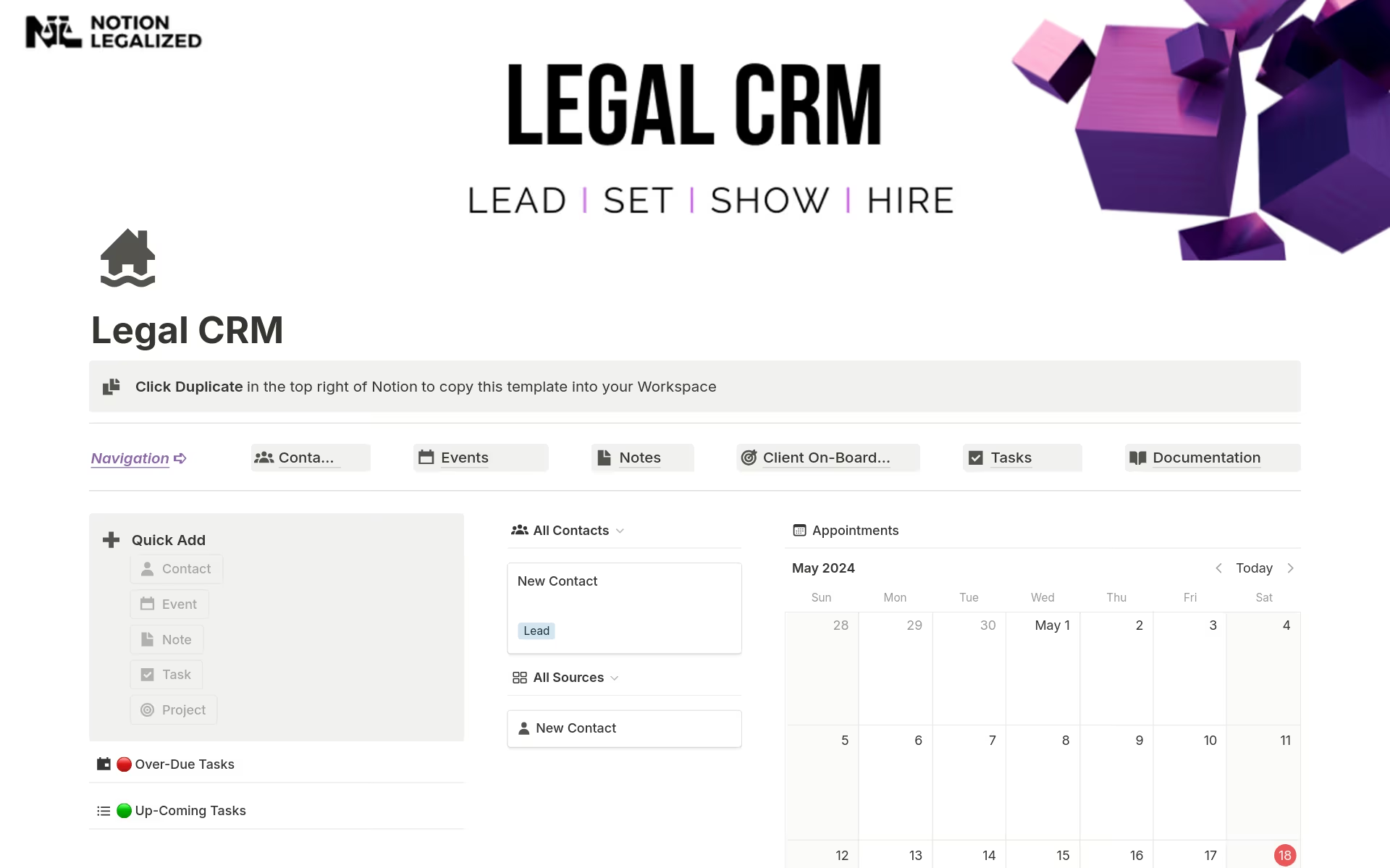
In the fast-paced and highly competitive legal industry, client management, communication, and streamlined processes are critical to success. Traditional customer relationship management systems fall short when it comes to addressing the unique needs of legal professionals. That’s why a Legal CRM — a CRM specifically designed for law firms and attorneys — is an essential tool for any modern legal practice aiming to thrive in today’s digital landscape.
This comprehensive guide will explore what a Legal CRM is, its core features, benefits, and how it can transform your law firm into an efficient, client-centric operation that scales smoothly and ethically.
What is a Legal CRM?
A Legal CRM (Customer Relationship Management system for law firms) is a software solution tailored to help legal professionals manage client relationships, automate communication, track leads, handle case intake, and improve workflow efficiency — all while staying compliant with legal industry standards.
Unlike generic CRMs, Legal CRMs come equipped with features like case intake forms, legal document templates, e-signature integrations, conflict checks, and court date tracking, making them an ideal choice for solo attorneys, small firms, and large practices alike.
Key Features of a Legal CRM
1. Client Intake Management
The client intake process is the first and most critical touchpoint in any legal relationship. Legal CRMs streamline intake by:
- Automating online form submissions
- Prequalifying leads with logic-based questions
- Assigning leads to attorneys or staff
- Collecting documents electronically
- Tracking source of leads for ROI analysis
This leads to faster, more efficient onboarding and a better client experience.
2. Case Tracking and Management
Legal CRMs provide case management tools that keep track of:
- Case type and status
- Assigned team members
- Deadlines and tasks
- Case notes and evidence
- Court dates and reminders
All case information is centralized and accessible, ensuring nothing falls through the cracks.
3. Automated Workflows
Legal CRMs automate repetitive tasks such as:
- Sending follow-up emails
- Scheduling consultations
- Notifying clients of updates
- Creating tasks for paralegals or attorneys
- Setting up reminders for important deadlines
Automation helps your team focus more on legal work and less on admin.
4. Document Management
Easily generate, store, and share legal documents including:
- Retainer agreements
- Court filings
- Legal templates
- Contracts and NDAs
- Fee agreements
Many Legal CRMs integrate with e-signature tools like DocuSign or HelloSign to make signing seamless and secure.
5. Secure Communication
Client confidentiality is non-negotiable. Legal CRMs include:
- Encrypted client portals
- Secure email and text messaging
- Access control and audit logs
- HIPAA or GDPR compliance (for certain regions)
Secure communication protects client data and maintains trust.
6. Lead Management and Marketing
Legal CRMs can serve as powerful marketing engines, helping you:
- Capture leads from your website or social media
- Track marketing campaign ROI
- Segment leads by practice area
- Send newsletters or nurture campaigns
- Set appointments automatically
This ensures that no opportunity goes untouched — turning leads into retained clients.
7. Integrations with Legal Tech
Modern Legal CRMs integrate with tools that attorneys already use, such as:
- Practice management systems (Clio, MyCase, PracticePanther)
- Email (Outlook, Gmail)
- Calendars and scheduling tools
- Billing and accounting software (QuickBooks, LawPay)
These integrations create an all-in-one ecosystem for your law firm.
Benefits of Using a Legal CRM
✅ Improve Client Retention
By personalizing client communication and providing timely updates, you enhance trust and satisfaction — increasing the likelihood of repeat business and referrals.
✅ Faster Response Time
Automated notifications and follow-ups reduce response delays and help you capture leads while they’re still hot.
✅ Better Team Collaboration
With shared access to client information, tasks, and communications, your legal team works more effectively and avoids duplication.
✅ Higher Case Conversion Rates
Track which sources bring in the most valuable leads, optimize your intake process, and convert more prospects into clients.
✅ Data Security and Compliance
Legal CRMs prioritize data protection, helping your firm maintain confidentiality, avoid ethical pitfalls, and comply with regulations.
✅ Scalability
Whether you’re adding more clients or expanding your team, a Legal CRM scales with your practice without added complexity.
Top Legal CRM Platforms in 2025
Here’s a comparison of some of the most popular Legal CRMs available:
| CRM Platform | Best For | Key Features | Price Range |
|---|---|---|---|
| Lawmatics | Law firms & solo practitioners | Automation, intake, marketing | $$ |
| Clio Grow | Small to midsize firms | Lead tracking, client intake, e-signature | $$ |
| MyCase | General practice firms | Client portal, case management | $$ |
| PracticePanther | Growing law firms | Document automation, task workflows | $$ |
| HubSpot (with legal customization) | Tech-savvy law firms | Marketing automation, lead scoring | $$ |
| Lexicata (acquired by Clio) | Client intake focused firms | Now part of Clio Grow | $$ |
Each of these platforms offers a combination of intake management, communication tools, and workflow automation tailored for legal professionals.
Who Should Use a Legal CRM?
A Legal CRM is ideal for:
- Solo attorneys who want to automate client communication and intake
- Small firms looking to improve lead conversion and collaboration
- Mid-sized practices needing scalable workflow automation
- Niche firms (e.g., immigration, personal injury, family law) with complex case pipelines
- Multi-location law firms needing centralized data access
If you’re struggling with disorganization, missed follow-ups, or client churn — a Legal CRM is your solution.
How to Choose the Right Legal CRM
When evaluating a Legal CRM, consider:
🔹 Ease of Use
Your team should be able to start using the platform quickly with minimal training.
🔹 Customization
Your CRM should reflect how your firm operates, with customizable pipelines, forms, and workflows.
🔹 Security and Compliance
Look for CRMs that offer encryption, access control, and compliance with HIPAA, GDPR, or other relevant standards.
🔹 Integration with Existing Tools
Ensure compatibility with your email, calendar, case management, and billing systems.
🔹 Scalability
Your CRM should grow with your firm without adding friction or cost overload.
Getting Started with a Legal CRM
- Assess Your Needs: Identify your firm’s pain points (e.g., lead tracking, intake, client communication).
- Compare Solutions: Demo several Legal CRMs to see what features best align with your practice.
- Plan Your Onboarding: Work with the CRM’s support team for setup, training, and migration.
- Automate Wisely: Start by automating intake and basic client follow-ups, then build on that.
- Track Performance: Use built-in analytics to monitor lead sources, case progress, and staff efficiency.
Final Thoughts: Why Every Modern Law Firm Needs a Legal CRM
In an era where clients demand faster service, better communication, and more transparency, a Legal CRM gives law firms the tools to not just meet expectations — but exceed them. Whether you’re a solo attorney or managing a team of litigators, a well-implemented Legal CRM can streamline your workflow, reduce human error, and grow your practice sustainably.
By consolidating lead generation, client intake, case tracking, and communication into one intelligent platform, Legal CRMs empower legal professionals to focus on what matters most — serving clients and winning cases.