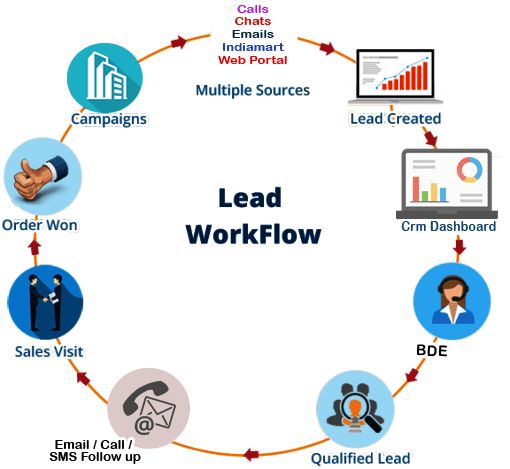
In the modern business landscape, generating leads is only half the battle — the real challenge lies in managing those leads effectively. That’s where a Lead Management CRM (Customer Relationship Management system) becomes indispensable. It helps businesses capture, organize, track, and nurture leads from the first point of contact to conversion, all while improving efficiency and maximizing revenue.
Whether you’re a small business, a growing startup, or a large enterprise, implementing the right lead management CRM can significantly boost your sales performance and streamline your operations. In this comprehensive guide, we will explore what lead management CRM is, its must-have features, the benefits it offers, and how to choose the best solution for your business.
What is a Lead Management CRM?
A Lead Management CRM is a software tool designed to centralize all lead-related information, helping sales and marketing teams manage their interactions, follow-ups, and conversion efforts more effectively. It automates the lead journey — from acquisition and qualification to nurturing and closing — ensuring no opportunity is lost due to poor tracking or delayed responses.
Unlike generic CRMs, a lead management CRM focuses specifically on the front end of the sales process, making it ideal for businesses with high lead volumes or complex sales cycles.
Key Features of a Lead Management CRM
To truly support lead-driven growth, your CRM must offer a robust suite of features that cover every stage of the lead lifecycle. The following are essential:
1. Lead Capture and Import
A lead management CRM should integrate with various channels to automatically capture leads from:
- Website forms
- Landing pages
- Chatbots
- Social media platforms
- Email campaigns
- Third-party lead providers
This eliminates the need for manual data entry and ensures every potential lead is tracked from the start.
2. Lead Scoring and Qualification
Lead scoring allows you to assign values to leads based on predefined criteria such as:
- Demographics
- Behavior (site visits, email opens)
- Engagement level
- Fit for your product/service
This helps your team prioritize hot leads and route them to the right salespeople, improving conversion rates.
3. Pipeline Management
Visualize your sales funnel with customizable pipelines that show each lead’s stage, from “New” to “Qualified” to “Won.” This feature enables:
- Easy drag-and-drop movement of leads
- Forecasting potential revenue
- Identifying bottlenecks and slow stages
4. Automated Follow-Ups and Reminders
Consistency is key in sales. A CRM with automation can:
- Send emails and SMS at specific intervals
- Assign tasks and reminders
- Notify team members of lead activity
This ensures no lead is ever forgotten or neglected, regardless of pipeline size.
5. Lead Segmentation
Segment your leads based on various filters such as:
- Lead source
- Geography
- Industry
- Behavior
- Status in the pipeline
Segmentation allows personalized communication and higher engagement rates.
6. Reporting and Analytics
Track your lead generation and conversion performance with real-time reports on:
- Lead volume and sources
- Conversion rates
- Sales team performance
- Time to close
- ROI from campaigns
These insights help you optimize your lead generation strategies and sales processes.
7. Integration Capabilities
The best lead management CRMs integrate seamlessly with:
- Email marketing tools (e.g., Mailchimp, Constant Contact)
- Marketing automation platforms
- Lead generation tools
- Payment gateways
- Accounting and invoicing software
This creates a fully connected sales and marketing ecosystem.
Top Benefits of Using a Lead Management CRM
✅ Improved Lead Conversion Rates
By tracking and nurturing every lead effectively, businesses significantly increase their chances of converting leads into paying customers.
✅ Faster Response Times
Automated alerts and task assignments ensure leads are followed up promptly, which is crucial since speed-to-lead is one of the most important sales factors.
✅ Sales Team Productivity
Sales reps spend less time on admin and more time selling. CRM automation reduces repetitive tasks and manual data entry.
✅ Centralized Lead Data
All lead information — including contact history, preferences, and interactions — is stored in one place, accessible to all team members.
✅ Informed Decision-Making
With detailed analytics and reporting, managers can make smarter decisions about marketing budgets, sales tactics, and team performance.
✅ Scalability
A good lead management CRM grows with your business, accommodating more users, more leads, and more advanced processes as your company scales.
Best Lead Management CRMs in 2025
Here are some of the top lead management CRM platforms on the market today:
| CRM Platform | Best For | Key Strengths | Pricing |
|---|---|---|---|
| HubSpot CRM | SMBs and Startups | Free plan, automation, marketing features | Free – Paid tiers |
| Salesforce Sales Cloud | Enterprises | Custom workflows, extensive features | High-end pricing |
| Zoho CRM | Small to Medium Businesses | Affordable, customizable, AI features | Low – Mid-tier |
| Pipedrive | Sales Teams | Intuitive pipeline, easy to use | Mid-tier |
| Freshsales (Freshworks) | Growing Sales Teams | Built-in phone/email, AI-based lead scoring | Competitive pricing |
| Keap (formerly Infusionsoft) | Service-based businesses | Email + CRM + payments | Subscription-based |
Each of these CRMs offers robust lead management tools — your choice will depend on your budget, sales complexity, and tech stack.
How to Choose the Right Lead Management CRM
When evaluating CRM platforms, consider the following criteria:
🔹 Ease of Use
A user-friendly interface ensures your team will actually use the software and won’t require months of training.
🔹 Customization
The CRM should be flexible enough to adapt to your sales process — not the other way around.
🔹 Mobile Access
In today’s remote and hybrid work environments, access on mobile is a must-have for real-time updates and lead follow-ups.
🔹 Customer Support
Look for CRM providers that offer strong customer support, onboarding, and resources to help your team succeed.
🔹 Scalability and Security
As your lead volume grows, your CRM should scale with you — without sacrificing data security or speed.
Final Thoughts: Why Lead Management CRM is Non-Negotiable
In a world where customer expectations are higher than ever, businesses cannot afford to drop leads due to disorganized tracking or delayed follow-ups. A Lead Management CRM acts as the backbone of your sales operation — giving you the structure, visibility, and automation you need to convert more leads, faster.
Whether you’re starting from scratch or upgrading from spreadsheets, the right lead management CRM will help you close more deals, shorten your sales cycle, and build stronger relationships with prospects.